ByJohn A
The Role of 3D Rendering in Modern Exhibition and Museum Design
Designing a museum or exhibition space used to rely heavily on foam boards, hand-drawn sketches, and a lot of guesswork. Modern spatial designers leverage 3D software and animation to rewrite the rules of how cultural spaces are planned, funded, and ultimately experienced.
By building an exact digital twin of a gallery before physical construction even begins, design teams can solve complex logistical problems early, save money, and create deeply engaging environments.
Here is how modern 3D rendering is transforming the museum landscape.
Securing Approvals and Funding
Getting a museum project off the ground means convincing an array of stakeholders, from strict municipal committees and skeptical board members to curators and private donors. Traditional blueprints and flat imagery rarely convey the emotional or spatial impact of a gallery, making it difficult to secure institutional funding.
High-fidelity 3D renders bridge this gap, offering stakeholders a literal look at the finished space before a single dollar is spent. Designers can present photorealistic visuals that show exactly how materials, colors, and scales will interact in the final space. Going a step further, 3D rendering software and animation allow teams to create “day in the life” walkthroughs. These cinematic animations show stakeholders exactly how visitors will navigate and interact with the space. Renderings can also demonstrate the structural modularity of temporary exhibition walls, proving to practical board members that the design is highly adaptable and cost-effective for future installations.
Visualizing the Visitor Journey
A successful exhibition must balance aesthetics with practical crowd management. Designers use 3D environments to simulate real-world physics, spatial dimensions, and human behavior before a single wall is built.
- Modeling Traffic Flow: Designers can simulate how dense crowds flow through entrances and narrow corridors, catching and fixing frustrating bottlenecks before they happen.
- Testing Sightlines: Digital modeling lets designers check lines of sight from multiple heights, ensuring signage and artifacts are fully visible to a child or a visitor in a wheelchair.
- Planning Precision Lighting: Conservation is a top priority for curators. 3D software simulates exact light lux levels and angles to ensure sensitive textile or paper artifacts are illuminated beautifully without risking permanent UV damage.
See also: Home Improvement Center Advice for Better Home Layouts
Blending the Physical and Digital (Phygital)
The days of the lonely, static glass display case are fading. Today’s museums favor ‘phygital’ environments that seamlessly blend tangible objects with digital layers. 3D rendering acts as the ultimate testing ground for these hybrid spaces.
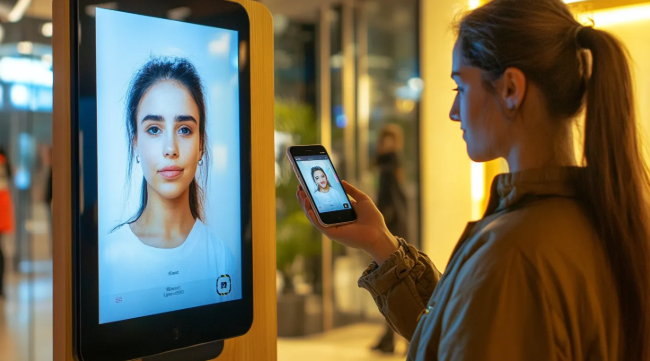
Designers use rendering software to visualize precisely how augmented reality (AR) layers will look when visitors hold up screens over physical statues. They can map out how projected 3D animations will wrap around curved or textured exhibit walls without distorting. 3D rendering also allows for the layout of interactive touch-screen kiosks. Visitors can use these kiosks to view “explodable” digital models of fragile artifacts, spinning and deconstructing them to see intricate inner details without ever touching the irreplaceable real object.
Digital Preservation and Global Accessibility
3D rendering is not just for designing physical rooms; it is also an invaluable tool for archiving human history.
When conservationists use lasers to 3D scan fragile, aging artifacts, they create highly accurate, permanent digital assets. Multimedia designers then use animation to digitally “reconstruct” broken or missing historical pieces, showing visitors what an ancient Greek vase or shattered Roman statue looked like in its prime. Finally, these rendered environments can be compiled into immersive virtual museum tours. This completely removes geographic and financial barriers, making rare collections accessible to a global audience of students, researchers, and enthusiasts from home.